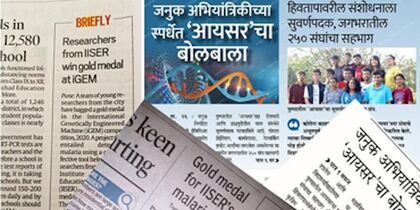
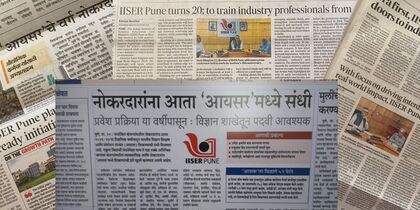
Links to some of the news articles that have appeared in the media on this work: Hindustan Times, Indian Express, Navrashtra, Navbharat, Pudhari, Times of India, Pune Pulse, Free Press Journal
The research paper has appeared on the Cover Page of the Feb 10, 2026 issue and covered in a Commentary article in the Feb 17, 2026 issue of the journal PNAS.
In a paper published in the journal Proceedings of the National Academy of Sciences, USA (PNAS), Prof. Kalika Prasad’s group from the Biology Department of IISER Pune studied the role of autophagy, which is a cellular “clean-up” system, in regulating cellular stress and thereby regeneration in plants following an injury.
“It has been known for centuries that plants can reproduce asexually through vegetative propagation. A small cutting placed in soil can grow roots, leaves, and even an entire new plant. But how do plants survive the stress of being cut and still manage to regenerate?,” said Prof. Kalika Prasad describing the overarching question addressed through his group’s research.
In the present research paper, Prof. Prasad and team found that activation of autophagy, which subsequently optimizes the levels of reactive oxygen species (ROS) in cells, is required for root regeneration from cut ends of leaves. Found in almost all living organisms, autophagy is a biological process that removes damaged cell parts and organelles caused by stress, preventing them from piling up and harming the cell.
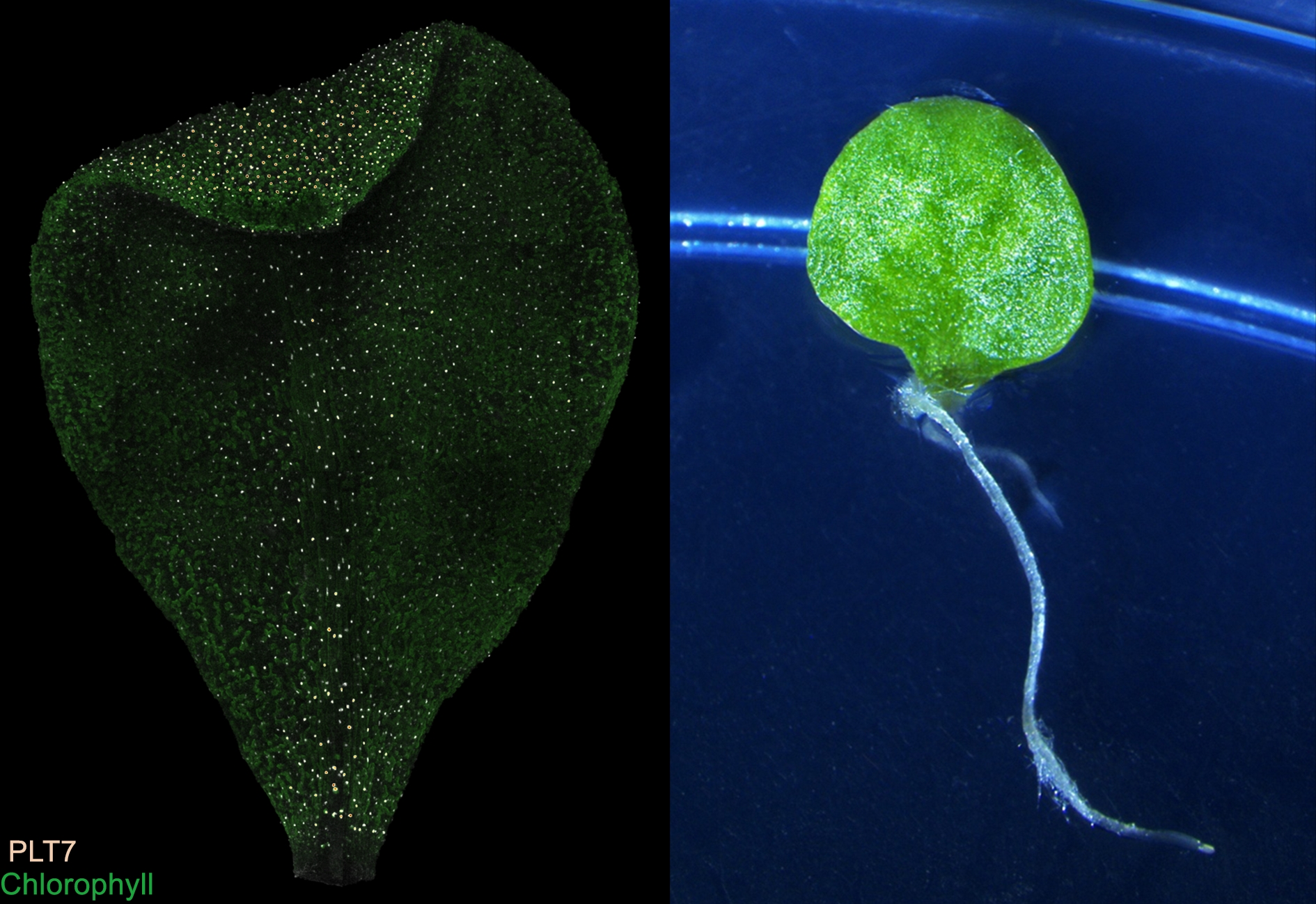
Image on the Left: Arabidopsis leaf expressing PLT7 factor; Image on the Right: De novo root regeneration: A detached plant leaf can regenerate adventitious roots with no external help. This study shows that this is because plant-specific PLETHORA factors activate autophagy that stabilises cellular stress down to the optimal levels necessary for organ regeneration. (Image Credit: Prof. Kalika Prasad’s Group)
The team found that a specific subset of autophagy genes--the ATG8F and ATG8H isoforms--are involved in root regeneration. Further experiments showed that PLT7, a member of the PLETHORA (PLT) gene family, regulates the ATG8F, and PLT3 regulates ATG8H expression, in plant cells. These results suggest that autophagy during regeneration is regulated via the plant-specific PLETHORA proteins.
Simultaneously, when a wound occurs in plants, such as when a stem, leaf, or root is cut, at the cellular level, this stress is reflected by a rapid rise in molecules called reactive oxygen species (ROS). While high levels of ROS are capable of damaging cells, the team found that plants have evolved a smart way to manage this surge so that regeneration can proceed. The team found that PLETHORA-regulated autophagic activation is essential for reducing intracellular reactive oxygen species to optimal levels during root regeneration.
The team inferred that the autophagy clean-up process helps bring cellular stress (ROS levels) down to a healthy level. Once cellular stress is under control, the levels of stem cell regulators increase at the wound site, allowing the plant to heal and regenerate new organs.
“It is interesting to see that in both plants and animals, ROS act as early wound signals that activate autophagy to restore balance and support tissue regrowth. However, plants add their own unique twist: they use plant-specific proteins called PLETHORA to precisely guide this ROS–autophagy system for successful regeneration. Through the present study, we uncovered a previously unrecognised PLETHORA–autophagy–ROS regulatory module that enables plants to regenerate” said Prof. Prasad highlighting the new insights on regeneration in plants obtained through this study.
This research was carried out at IISER Pune with support from national funding agencies, including the Department of Biotechnology, Government of India, and the Anusandhan National Research Foundation. This work was led by PhD student Akansha Ganguly together with undergraduate students, Aabha Humnabadkar and Komal Gautam from Prof. Kalika Prasad’s research group at IISER Pune. Collaborators from Netherlands, China, and Germany contributed to this study by providing new research reagents.
Citation
Akansha Ganguly, Aabha Humnabadkar, Komal Gautam, Viola Willemsen, Lin Xu, Yasin Dagdas, and Kalika Prasad (2026). PLETHORA–autophagy axis activates organ regeneration through ROS modulation. Proceedings of the National Academy of Sciences, USA, 123 (6) e2513954123 https://doi.org/10.1073/pnas.2513954123