Mohindar Murugesh Karunakaran
Assistant Professor
Biology
Molecular and cellular immunology, immunogenetics, comparative immunology, and molecular biology
+91-20-25908742
mohindar@iiserpune.ac.in


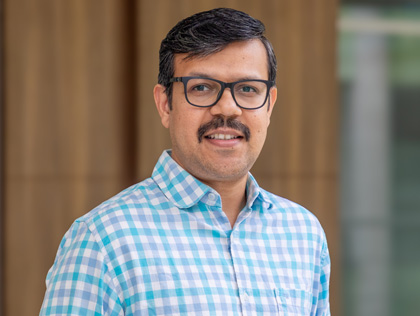
Assistant Professor
Biology
Molecular and cellular immunology, immunogenetics, comparative immunology, and molecular biology
+91-20-25908742
mohindar@iiserpune.ac.in
Dr. Mohindar Murugesh Karunakaran obtained his Master’s degree in Biotechnology from the University of Madras. He began his scientific career with a PhD in Molecular Immunology and Immunogenetics at the Institute of Virology and Immunobiology, University of Würzburg, Germany, under the supervision of Prof. Thomas Herrmann. During his doctoral and postdoctoral research, he extensively investigated human Vγ9Vδ2 T cells and the molecular mechanisms underlying their activation. In 2026, he joined IISER Pune as an Assistant Professor. His research focuses on understanding how human Vγ9Vδ2 T cells recognise and respond to stressed, infected, and cancerous cells, with particular emphasis on the immunomodulatory functions of butyrophilin (BTN) proteins in γδ T-cell activation and immune regulation.
Human Vγ9Vδ2 T cells are a unique population of immune cells with remarkable potential to combat cancer and infectious diseases. Our research seeks to understand the molecular mechanisms that govern how these cells recognize stressed tissues, initiate immune responses, and how these processes can be harnessed for therapeutic benefit. We investigate how butyrophilin (BTN) proteins assemble and communicate with the Vγ9Vδ2 T-cell receptor to regulate immune activation, and how alterations in these interactions influence immune responses in health and disease. To uncover the evolutionary principles underlying this unique recognition system, we employ comparative immunology using human and camelid models, providing insights that are difficult to obtain from conventional animal models. We also explore the immunomodulatory roles of BTN family members within the tumour microenvironment and during infection, where they can either promote or restrain immune responses. Our research integrates molecular and cellular immunology with protein engineering, advanced imaging, genome editing, and functional immune assays to bridge fundamental discoveries with translational applications. Through these complementary approaches, we aim to advance our understanding of unconventional T-cell biology and contribute to the development of next-generation immunotherapies.