A new study published in the British Ecological Society’s journal People and Nature brings together two otherwise disparate disciplines in an effort to conserve biodiversity. IISER Pune PhD student Digvijay Patil collaborated with ecologist Dr. Ashish Nerlekar to study the savanna grasslands of western India using written and oral traditional Marathi literature spanning the 13th to the 20th centuries.
Digvijay Patil is a doctoral student in the Department of Humanities and Social Sciences at IISER Pune. He is researching religious traditions in western India under the guidance of Dr. Pushkar Sohoni, and the literary perception of the natural environment at sacred sites is one of the recurring themes in his studies. Ashish Nerlekar was a Presidential Postdoctoral Fellow at Michigan State University, USA, during the course of this study and has recently joined as a Ramanujan fellow in the Department of Biology at IISER Pune.
Ecology meets Mythology: Medieval stories and songs uncover India’s ecological past
by Ashish N. Nerlekar and Digvijay Patil
Amid the ongoing global biodiversity crisis, conserving the high biodiversity of tropical savannas and grasslands is critical. Tropical savannas cover around a third of Earth’s land surface. Yet they continue to be misunderstood as degraded grassy habitats formed by human-induced forest clearing. While scientists have provided clear evidence of their deep antiquity, the ecological histories of many tropical savannas remain misunderstood in public and policy spheres, leading to their mismanagement. Our timely study, with a novel approach, offers a culturally resonant line of evidence with significant potential to promote the uptake of accurate ecological histories.
In this study, we used the savannas of western India as a case study, where most speak, read, and write Marathi. We reviewed the written and oral traditional Marathi literature spanning the 13th to the 20th centuries. The reviewed literature encompasses varied genres, including verse and prose biographies of religious figures, founding myths of sacred sites, ritual songs performed by pastoralists, and songs sung by women while performing daily chores.
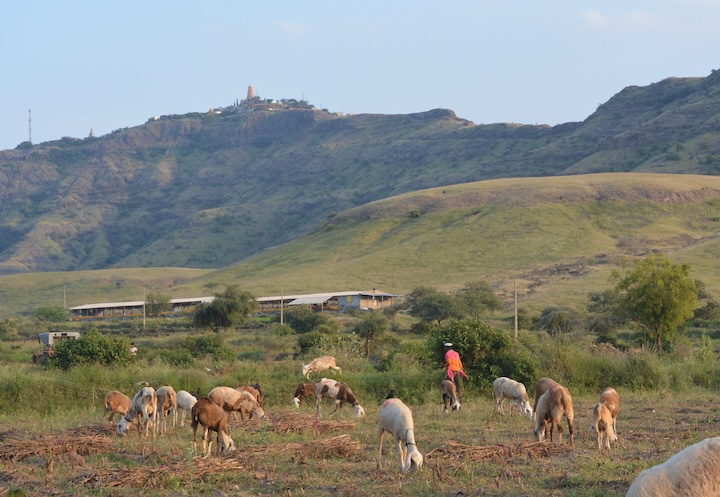
From this literature, we identified 28 excerpts containing descriptions of landscapes and wild plant species associated with specific locations in our study region. Using botanical literature and dictionaries, we then matched the vernacular names of plants with their scientific equivalents.
Out of the 44 wild plant species recorded, a clear majority (27 species) were savanna indicators, 14 were generalists (meaning occurring in both savannas and forests), and only three were forest indicators. Contradicting the popular notion of a forested past, the identified excerpts instead point to a savanna in the past.
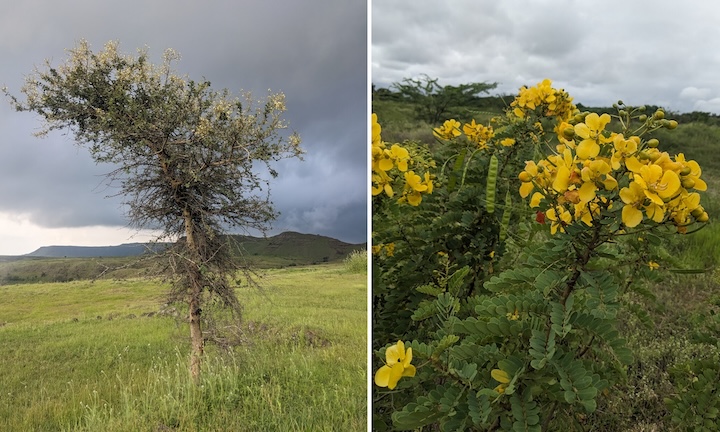
The ecological reconstructions from our novel line of evidence complemented other lines of evidence: archival paintings, revenue records, plant and animal fossils, and dated molecular phylogenies of endemic biodiversity—all attesting to the antiquity of India’s savannas.
Given their high cultural resonance, we suggest that researchers across the globe should better acknowledge place-based traditional literature as biocultural archives. Our work highlights the potential of traditional literature in triangulating the ecological histories of threatened ecosystems such as tropical savannas and in also recalibrating the global understanding of our planet’s ecological history.
Citation:
Nerlekar, Ashish N., and Digvijay Patil. Utilizing traditional literature to triangulate the ecological history of a tropical savanna. People and Nature (2025). https://doi.org/10.1002/pan3.70201